Build your grocery list around what is already in the kitchen
A short cupboard, fridge and freezer check can turn a list of usual purchases into a plan for the meals you actually need.
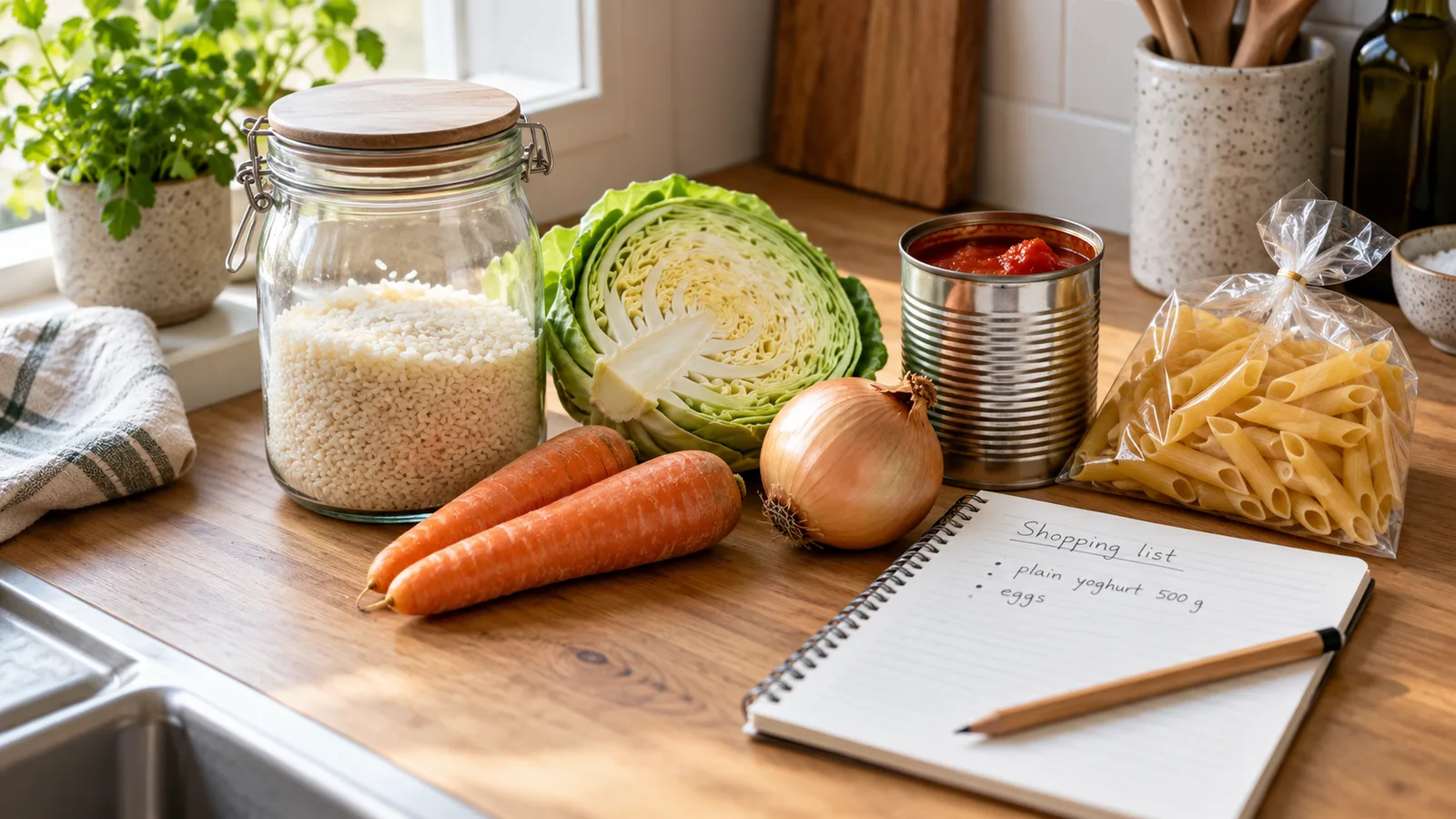
Start with the food you already have
Before writing your next grocery list, check the fridge, freezer and cupboards. Pick a few ingredients you want to use and build meals around them.
Write down quantities you can see, rather than relying on memory. Half a bag of rice might cover the meal you have in mind; an almost-empty bottle of cooking oil might still need replacing. Keep a separate note of anything you cannot check.
Plan for the week you will actually have
Count the meals you expect to eat at home. Allow for a late finish, lunch away from home or a night when you will want something quick. Choose meals that fit that schedule.
Give ingredients a job. If a recipe needs half a cabbage, decide how you would use the rest before adding a whole one to the list. A second meal, a different pack size or a different recipe may suit you better.
Write the missing ingredients, with quantities
Turn the meal plan into a list of gaps. If you already have pasta and tomatoes, you may only need the vegetables and protein for the meal. Add breakfast, lunch and household items separately so they are easy to check.
Include a usable quantity and any requirement that matters to your household. For example, write “plain yoghurt, about 500 g” rather than just “yoghurt”. Check labels yourself if an ingredient or dietary requirement is important.
Make room for changes at the shop
Decide which ingredients you could swap before you leave. A flexible vegetable choice gives you options if the one you planned is unavailable or costs more than you want to pay.
At the checkout, review extras against the meals on your list. A special is useful when you have a plan for it and room in your budget. Keep the list after shopping and note what you did not use; that gives you a starting point next time.