Is a second supermarket stop worth it? Work out the difference first
Compare the same shopping list, account for missing items, and weigh the saving against the extra trip.
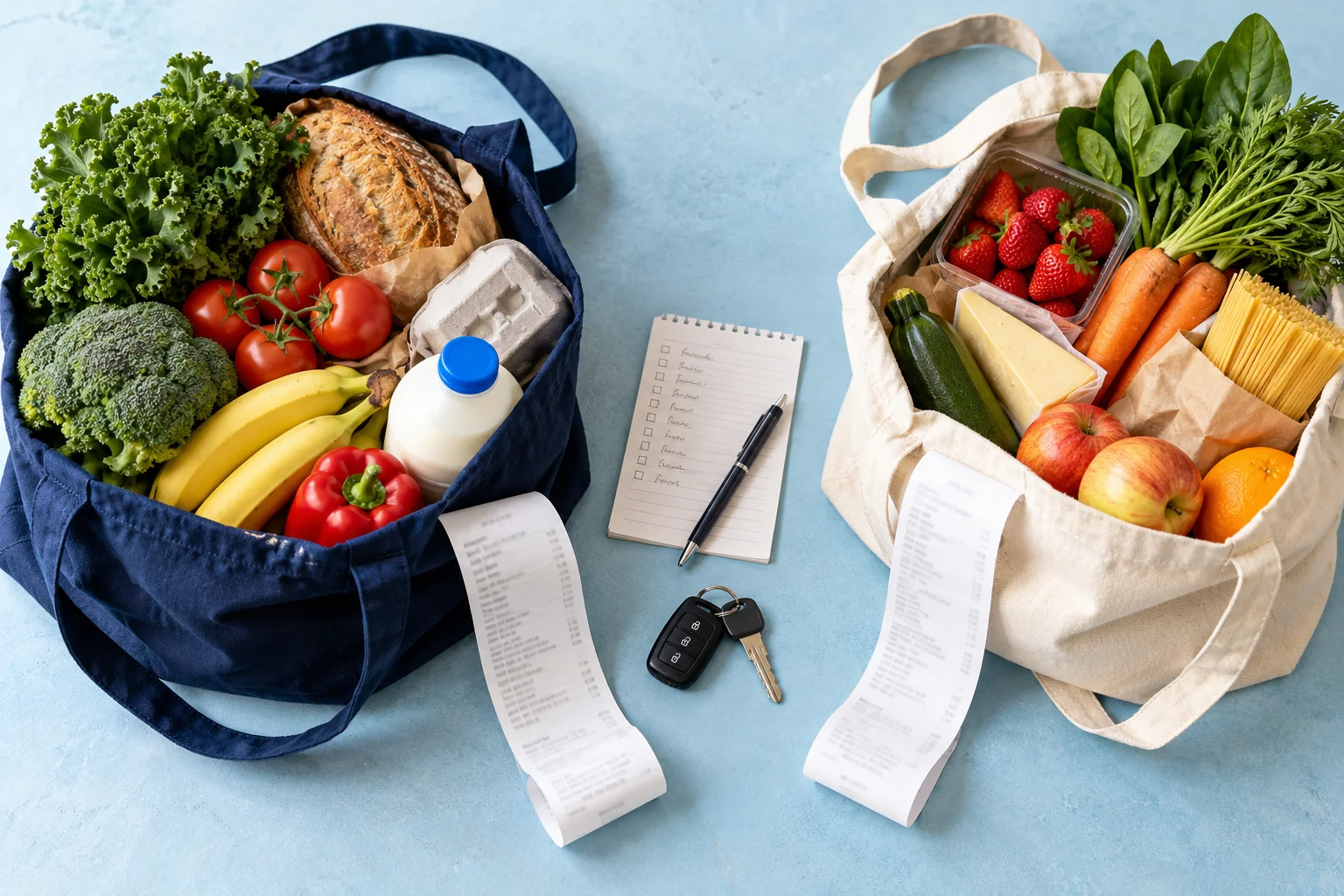
Start with the same list
Write down the groceries you need, including pack sizes and any brands or dietary requirements you want to keep. Decide which substitutions you would accept before comparing prices.
Choose the stores you could realistically visit. A cheaper price at a distant branch may have little bearing on the shop you can do today.
Separate a complete basket from a partial subtotal
Compare totals only when they cover the same products and quantities. If one store has no recorded price for an item, leave that item unresolved. Counting it as zero makes the comparison misleading.
You can still compare the items with prices at both stores. Label that result as a comparison of those items, then check the rest of your list separately.
Calculate what the extra stop changes
Consider a fictional shop where moving three items to a second supermarket lowers their combined cost from $24 to $20. The difference is $4 before any travel cost.
If the detour adds $3 in travel costs, the remaining benefit is $1. You can decide whether that is worth the extra time. Delivery fees, minimum orders and buying extra items can change the result as well.
Check before setting off
Review when the prices were recorded and confirm availability with the retailer. Keep any membership conditions or multibuy requirements in your calculation.
Start with one shop or a small group of frequently bought items. That makes it easier to see whether changing your routine is worthwhile.