Compare pack sizes before choosing the cheaper grocery item
A worked example of comparing the price per kilogram, plus the checks that make a bulk purchase worthwhile.
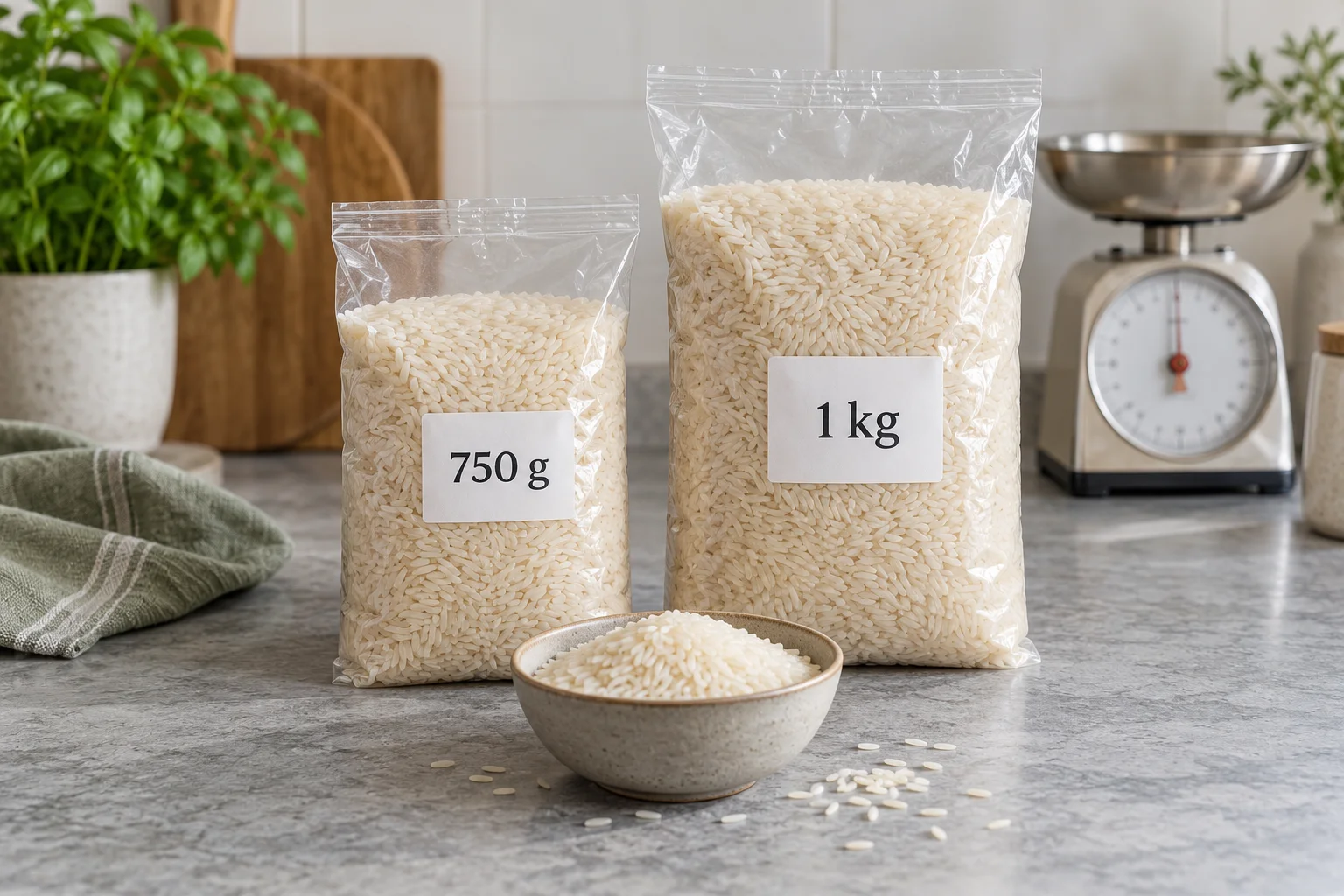
Put both packs on the same scale
A lower shelf price can come with a smaller pack. Divide the price by the quantity so you can compare like with like. For a price per kilogram, express both pack weights in kilograms first.
For example, a fictional 750 g bag of rice priced at $3 costs $4 per kilogram: $3 divided by 0.75 kg. A fictional 1 kg bag at $3.60 costs $3.60 per kilogram. The larger bag costs 60 cents more at the checkout but has the lower unit price.
Keep the product comparison fair
Compare products you would actually use for the same purpose. Check the variety and ingredients, along with any dietary requirements. A lower unit price has little value if the product will not suit your meals.
Use the same measurement on both sides. A price per 100 g needs converting before comparing it with a price per kilogram. Multiply the per-100 g price by ten.
Buy the quantity you can use
Check your cupboard space and how much you need before buying a larger pack. For perishables, consider whether you can use or freeze the extra food in time.
When comparing on shoparound, check the pack size attached to each listing. Treat missing or unclear quantities as a reason to inspect the retailer’s listing before choosing.