Fresh or frozen vegetables? Compare the amount you will use
Work out the cost of vegetables that reach the plate, alongside the recipe, storage space and preparation involved.
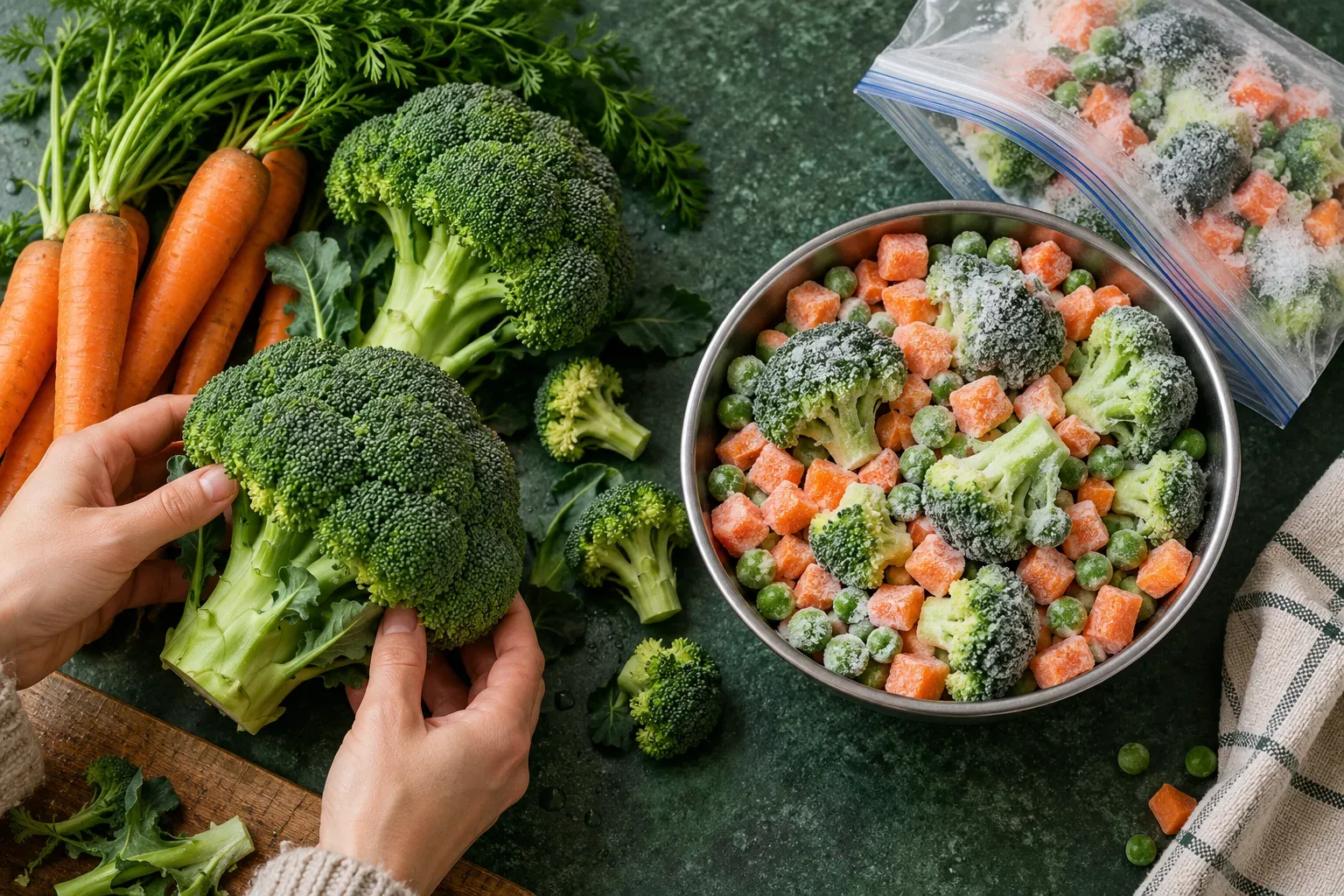
Start with the meals you are making
Choose the vegetable and the way you plan to cook it before comparing prices. Frozen diced vegetables may suit a soup, while a raw salad needs a different choice. Compare options that will work for the same meal.
Check what the pack includes. Plain vegetables, vegetables in sauce and prepared mixes can have different ingredients and uses. Check the price per kilogram alongside the product description.
Calculate the cost of the usable amount
Here is a fictional example. A 1 kg bag of fresh vegetables costs $4. If you trim or discard 200 g, it provides 800 g for meals. Dividing $4 by 0.8 kg gives an effective cost of $5 per kilogram used.
A 1 kg bag of plain frozen vegetables at $4.80 would cost $4.80 per kilogram used if you use all of it. In this example, frozen has a slightly lower usable cost despite a higher shelf price.
The result changes with your household. If you use the full fresh bag, its cost remains $4 per kilogram. Use realistic amounts rather than assuming a fixed level of waste. These figures are a worked example, not measured waste rates or current store prices.
You can also compare a portion you normally cook. At the example’s usable costs, a 200 g portion is $1 for the fresh option and 96 cents for frozen: a difference of 4 cents. That makes the scale of the saving easier to weigh against your preferences.
Include preparation and storage
Think about washing, trimming, chopping and freezer space. A prepared option may suit a busy evening even when its purchase price is higher. Follow the label’s storage and cooking instructions for whichever product you choose.
For a large pack, work out which meals will use the remainder. A lower unit price only helps if you have a practical use for the quantity. Avoid filling the freezer with a product you rarely cook.
Mix options to suit the week
You can buy fresh vegetables for meals where you prefer them and use frozen vegetables for another planned dish. Choose the quantities meal by meal rather than making a single rule for the entire shop.
Put those amounts on your shopping list before comparing stores. If a lower price would require an extra stop, weigh up the saving against the travel and time involved. The useful comparison is the food you will use and the total effort needed to get it home.